
About Martinus
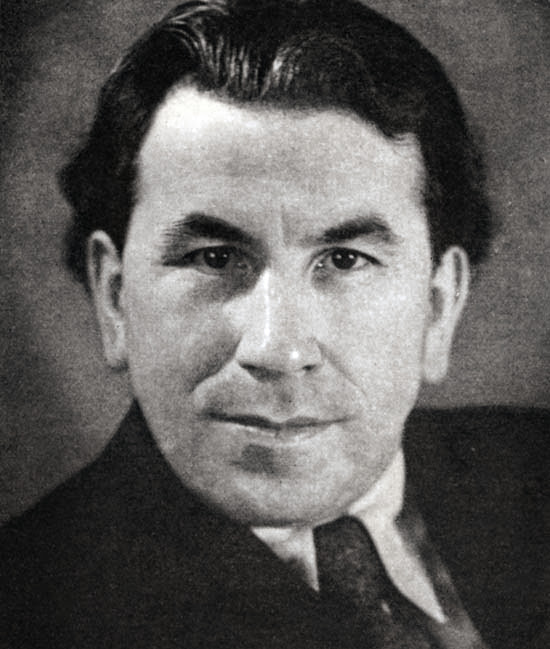
BIOGRAPHY OF MARTINUS
Introduction
The Dane Martinus is unknown to many today, partly because he himself wanted it, and partly because knowledge of his work has grown in an undramatic and quiet way. Martinus conveys something uniquely new in our time, as his work is based on an independent cosmic insight. It is his balanced capacity for intuition that makes this possible.
He describes the cosmic principles of our existence. He simply describes the fact of existence itself. It is an eternal wisdom to which he gives a new, logical and scientific expression. It is a wisdom that has been described in various ways by the initiates of humanity throughout the ages. Martinus’ contribution seems to be a rare and beautiful creation of clarity and logic, unique to our time.
Because it is the eternal principles of existence that Martinus points to, he goes beyond sectarianism and religion-building. He gives the reader the opportunity, based on his or her interests, to take part in existence from a supreme “idea perspective”. His life’s work is also a defense of all existence. With his work, Martinus made it possible for free people to think even more independently, and at the same time to be inspired to be in harmony with life’s deepest source of sympathy, namely love of neighbor.
Childhood and adolescence
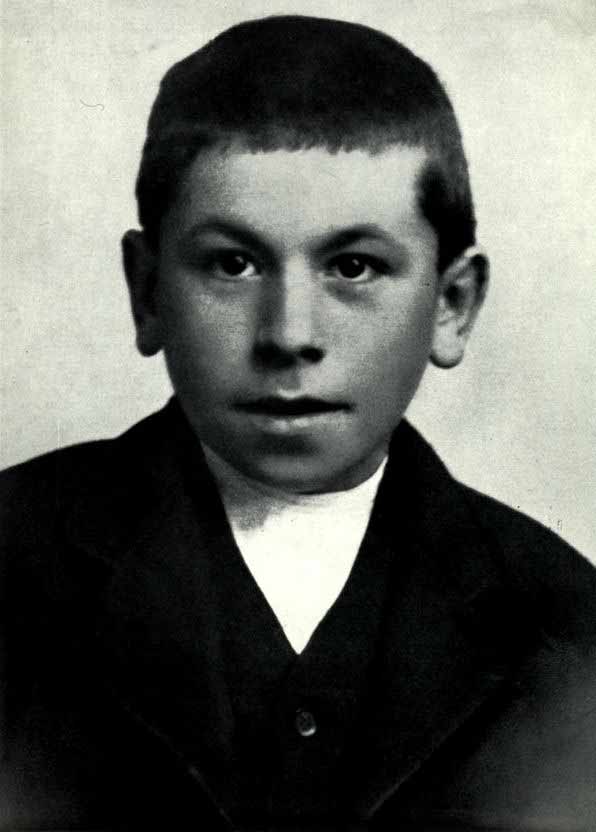
Martinus Thomsen was born in Denmark on August 11, 1890, in the village of Sindal in northern Jutland. His childhood was characterized by simplicity. Martinus was born out of wedlock to a single mother, who died early, when Martinus was 11 years old. There are indications that his father was the landowner Lars Larsen. Martinus was given up for adoption because his mother could not take him to the farm where she worked.
He ended up with his mother’s half-brother and his wife, who already had 11 children. However, most of the children had grown up by the time Martinus joined the couple. He worked as a shepherd for various farmers during his childhood. His education was limited to a few years of study in local village schools. There were few books in his childhood home.
As a boy, Martinus experienced the grandeur and beauty of nature. He experienced a communion with life and nature, and realized that there must be something greater outside his small world. He showed a gentle disposition early on, towards people and animals. Martinus worked as a shepherd for two years, before being confirmed at the age of 14. He then served an apprenticeship as a blacksmith, but it did not suit him, so he found new work in agriculture.
He later became a dairyman at a number of dairies in Denmark. He eventually ended up in Copenhagen and worked as a night watchman, among other things. He had some supernatural experiences during this time. He thought about becoming an artist, teacher or photographer, among other things, and longed to be of use to humanity. He quit after a while and became a clerk at the Enigheden dairy.
The cosmic baptism of fire
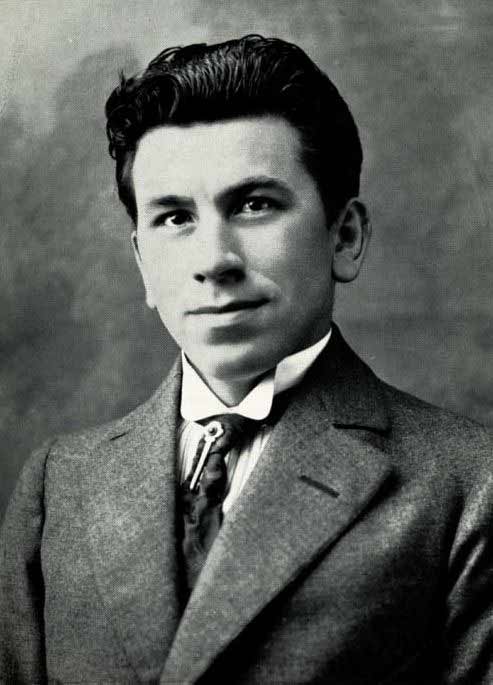
Martinus underwent a process at Easter 1921 that would transform his consciousness and perception. Stories from different cultures and mystics point to a heightened state of consciousness that is possible to achieve. Martinus had begun to think deeply about his own life and its meaning. At that time he was spiritually a blank slate. He had not read anything beyond the Bible at school. He describes himself as deeply religious in the sense of being close to and in constant conversation with God. Not a day went by without him praying to God. Jesus was an ideal for Martinus, without being traditionally religious. He used to ask what Jesus would have done in different situations.
Martinus had felt a longing for spiritual understanding, and he borrowed a Theosophical beginners’ book from a colleague. It was about meditation, among other things, and Martinus sat down to try it out. He never had time to finish the book before his consciousness underwent a transformation. The book urged the reader to meditate on God, and Martinus did so. Suddenly, Martinus experienced a sharp increase in consciousness, and he saw a Christ-like being coming towards him. It was surrounded by an intense living light. The being came closer to him and was now like a dazzling sunlight. Then it entered Martinus’ flesh and blood. An incredibly exalted feeling took over, and in the glow of the divine light he could look out over the world’s continents and oceans.
The next day he repeated his meditation exercise, and immediately he was surrounded by the divine light. The light filled him to the limit of what his organism could bear. He found himself in a sea of light. Every detail was like gold. Golden threads vibrated through everything. Martinus felt that there was God’s consciousness in everything. Through all creation, a supreme force governs existence. In traditional mystical terms, his experience could be divided into two phases: an outer phase, in which he saw the divine light, and an inner phase, in which he felt himself to be identical with it.
The result of the cosmic birth in Martinus
This experience transformed Martinus’ consciousness forever. He became conscious in a new body of consciousness. He experienced a sense of conscious immortality, and that it is only life that exists in everything, and that the darkness of existence is camouflaged love. He experienced how a flame of love transformed his being, and that all matter was alive. He experienced a deep sense of love for all existence.
What distinguishes Martinus from most mystics we have seen is that his cosmic consciousness lives on in his mind with undiminished power. He saw that all people will one day experience this, when their minds have been transformed into pure love and true logic. This new consciousness was not the result of hallucinations or the fruits of unnatural exercises, but existed with him as a day-conscious and completely psychologically calm state of presence in the invisible principles of existence. Martinus himself points out that the experiences themselves are not central, but what is important is the world view that now emerged within him as a day-conscious experience.
Martinus now felt that whatever question he asked, the answer was within him, available to his intuition. Gradually, he began to describe the world view that would be his main task to explain over the next 60 years, until his death in 1981. We could call Martinus a modern mystic. His main expression would be spiritual science. We could imagine that there are different frequencies in the universe, each corresponding to a different plane of existence.
Martinus’ cosmic birth gave him permanent access to a higher frequency, which transformed his sensory organs so that he could convey this world view. It is this higher frequency that people sometimes, in quiet moments, during intense moments, meditation or when they feel a deep sympathy for the universe, can experience as particularly transparent and clear. The ordinary human mind can receive only very small doses of this state of consciousness, because it presupposes an absolute balance between feeling and intelligence, which is the same as a deeply developed and very real love of the night.
Martinus felt that a torch of heavenly light had been placed in his hand and it was his task to pass it on to humanity. Earlier in his life he had thought of becoming a missionary, but he felt rejected by the preaching of dogmatic Christianity. Instead, he was to lay the foundations of an entirely modern spiritual science. In this way, his life became that of a modern ‘preacher’. His task was to make the cosmic science that he felt was the eternal basis of existence accessible to human intelligence, so that they could investigate this science independently.
Martinus cosmology
Martinus was given access to an ocean of knowledge beyond our traditional knowledge. He saw it as his task to pass on this objective knowledge to his fellow human beings. This is nothing less than the seed of a new human renaissance, uniting religion and science in a truly humane spirit. Martinus understood that his task was to convey to humanity a new world view, free from sectarianism or traditional religiosity, as much as strict materialism. He called this new worldview knowledge spiritual science.
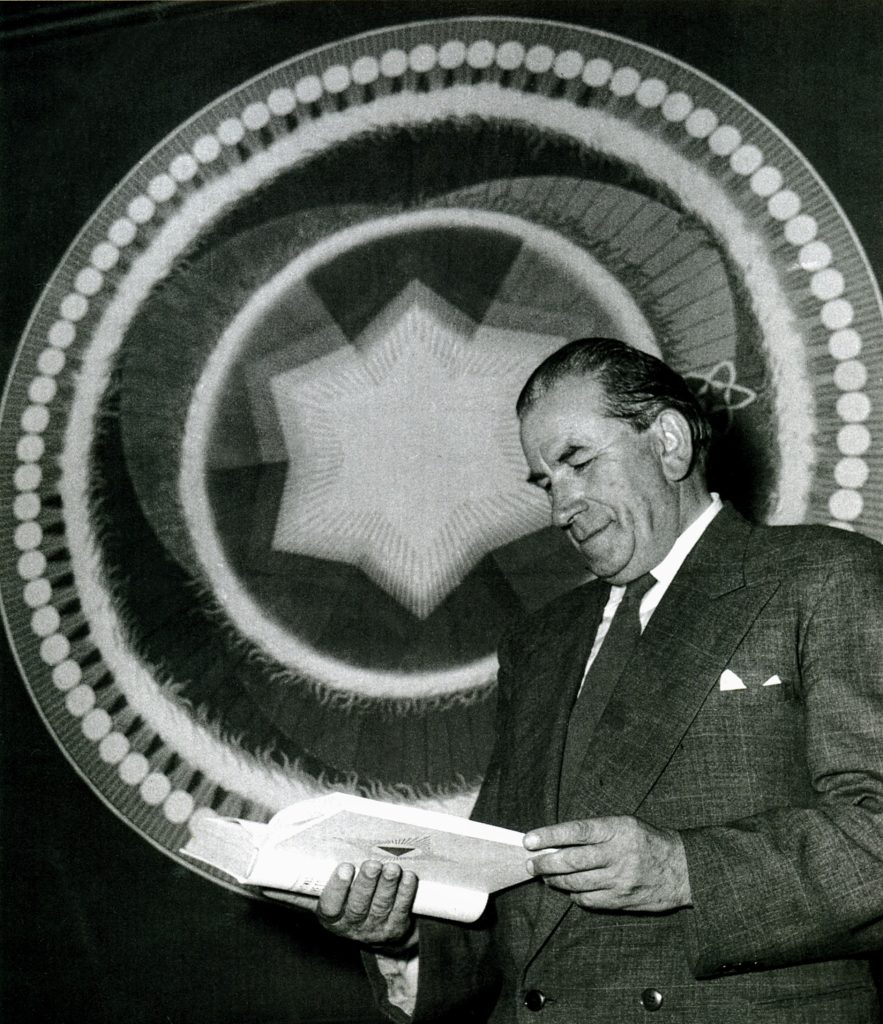
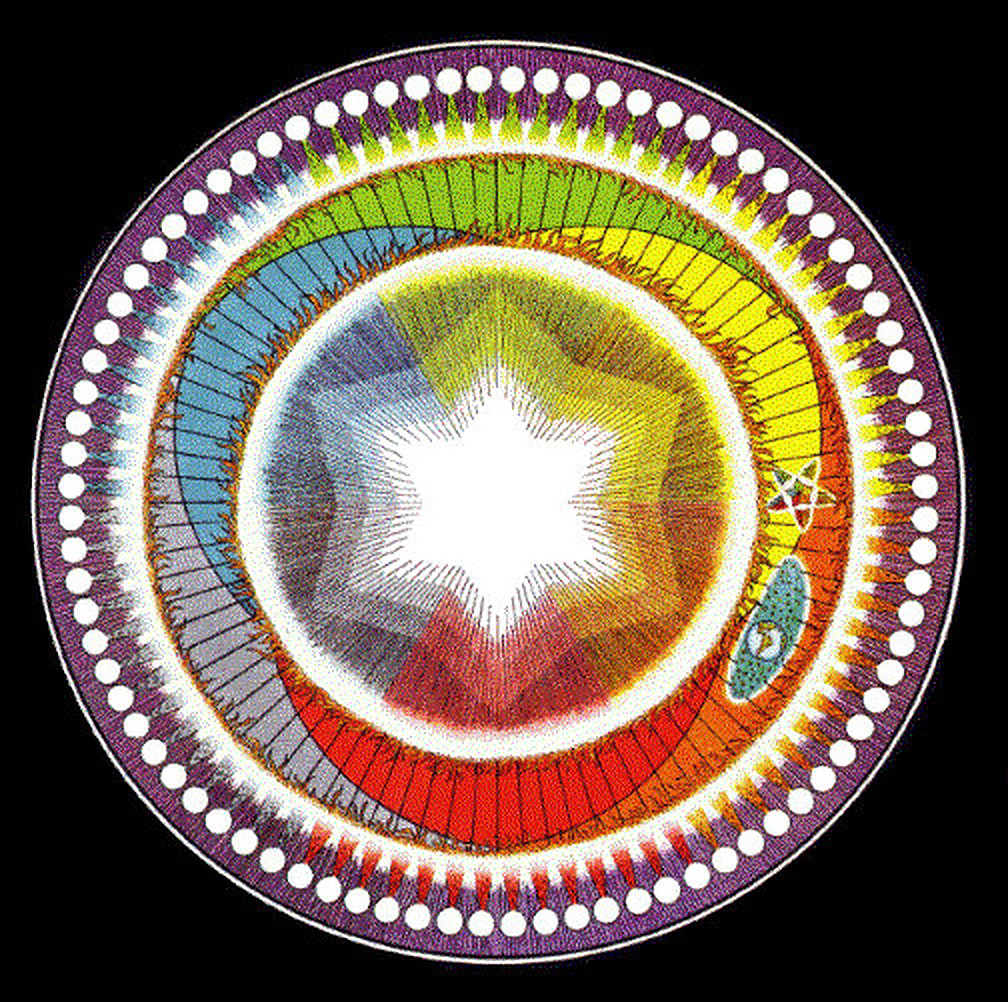
Martinus used mainly writing, supplemented by cosmic symbols showing the eternal principles of existence. He now embarked on the great journey of producing a cosmic world view, which independently thinking, morally interested people could study freely.
He wrote some 40 books, including the main work, the Book of Life, in seven volumes comprising over 2000 pages. He called his main work the Third Testament. He made about a hundred symbols. Most of the symbols were created during the years 1921-28. In 1933 the magazine Kosmos was published, and it lives on today with the same name. Martinus wrote articles, gave many lectures, taught and talked to many people during his lifetime. People remember him not least for his great humor and warmth, his boundless patience and gentleness. There are people who knew and worked with Martinus over decades who never once saw him angry or irritated. It was this loving evenness of mind that was the prerequisite for the permanent birth of his cosmic consciousness. Martinus believes that all human beings, on their unique paths, are in the process of growing towards higher and higher degrees of spiritual understanding.
Working with the cosmic worldview
It took time for Martinus to train his ability to present his knowledge in an easily understandable way. He had great help from various people here, not least the spiritual researcher Lars Nibelvang. Martinus also went through a bodily cleansing process, and it was as if the new consciousness required a transformation of his organism. It also took time for him to get used to his new consciousness. He became a vegetarian.
Martinus was able to stop his work through the support of others and could now concentrate on his work on the cosmic analyses. He gradually acquired a greater writing routine. He transcribed his first symbols as a kind of slide he drew and colored himself. He could now give the first lectures. This happened in 1928. He made new friends who supported his modest work, and who helped him along. He also began to give larger lectures. Martinus gave one lecture a month for nine years in a room that could hold 500 people. He spoke on subjects such as “The Basic Analyses of the World” and “Through the Gate of Death”, among many others. He often used his own symbols during these talks.
In 1932, the first part of the Book of Life was published. This was the start of a more outward-looking part of Martinus’ work. Seven years later, part two was published. During this time Martinus also wrote several smaller books.
The work continues to grow
In 1935, Kosmos Ferieby was opened in Klint in northern Zealand. People could now gather and study together during the summer months. This holiday village grew rapidly. It is beautifully situated by the sea, in a scenic area. Today, the Martinus Center at Klint is a study center where people gather from all over Scandinavia in particular, but also from much further afield. Martinus wanted this to be a place of peace and friendship, where people could study the eternal cosmic analyses in a good atmosphere. In the long term he wanted it to become a world university. During the Second World War, Martinus worked quietly on the cosmic world view. Over the years Martinus also received many people with problems in private.
In the early years of the work, finances were very tight and most of it was made possible through voluntary work. Martinus did not think that the name company or association was appropriate for his work, but called it The Cause. He dedicated this Cause to all mankind as a gift. Even today, most of the work around Martinus’ cosmology is based on voluntary work. Every year, money was collected for the work on the Cause, and volunteers contributed and made it possible to continue. This work continues unabated today. Martinus’ cosmology can be seen as a map to the birth of a new world, a world of loving freedom, human responsibility and international humanism.
In 1943 Martinus and his friends moved into the beautiful house that was to become the Martinus Institute in Copenhagen, at Mariendalsvej 94-96. This was also the home of Martinus and his secretary. Today, the Martinus Institute still has the same address and is the world center for Martinus Cosmology. Martinus decided that there should be only one Martinus Institute, and that people around the world should be able to set up Martinus Centers independently to study the cosmic world view.
He said that his wish was that this free community of study should be completely free. It is only by virtue of life itself and each person’s interest in the cosmic analyses that people are in contact with them. No one can claim to belong to a particular group in this context. Martinus explicitly said that he wished all those interested in the Cause to be equally friendly to people who had the same interest, as well as those who were not interested. It also presupposes a loving attitude towards all living things.
It is not merely a theoretical knowledge that Martinus speaks of, but one that fundamentally changes our lives, and which, independently guided by our desire, makes us serve the birth and goodness of a greater Cause in our physical world. Only in this way do we live close to the essence of the Cause, which is a loving and fully logical mentality. It is not a legal covenant or agreement per se, which can be violated or broken. It is something as big and as simple as a mentality. Martinus, like Jesus, talks about the importance of mutual love. This love is to grow through coherent logical analysis, which enables us to understand better what love really is. It is this love that he wanted to be the basis for a new center of culture.
In 1952 Martinus gave six lectures in Oslo. Over the years he would lecture in and visit Iceland, Sweden, England, Japan and India. Martinus also believed that the world would eventually have a world language, such as Esperanto. His analyses point very much towards the international.
In 1960, The Book of Life was completed, and between 1963 and 1968 the symbol books The Eternal World Picture were published. With The Book of Life, Martinus wanted to explain the deepest foundations of existence and what we have popularly called the mysteries of existence. In fact, the mysteries of existence cease with the completion of The Book of Life, and a new journey begins that can be called the cosmic adventure of existence. The reader is taken here into an unusual spirit of defense of all living things, and a unique compilation in the history of the world of the invisible basic principles of existence. It is unique because it originates entirely from a self-view of the eternal principles. This makes Martinus’ mission unique in our history. Apart from a few isolated quotations from the Bible, the book is free of other references other than to life and creation as a whole. Martinus continued to work until his death in 1981.
About Martinus the man
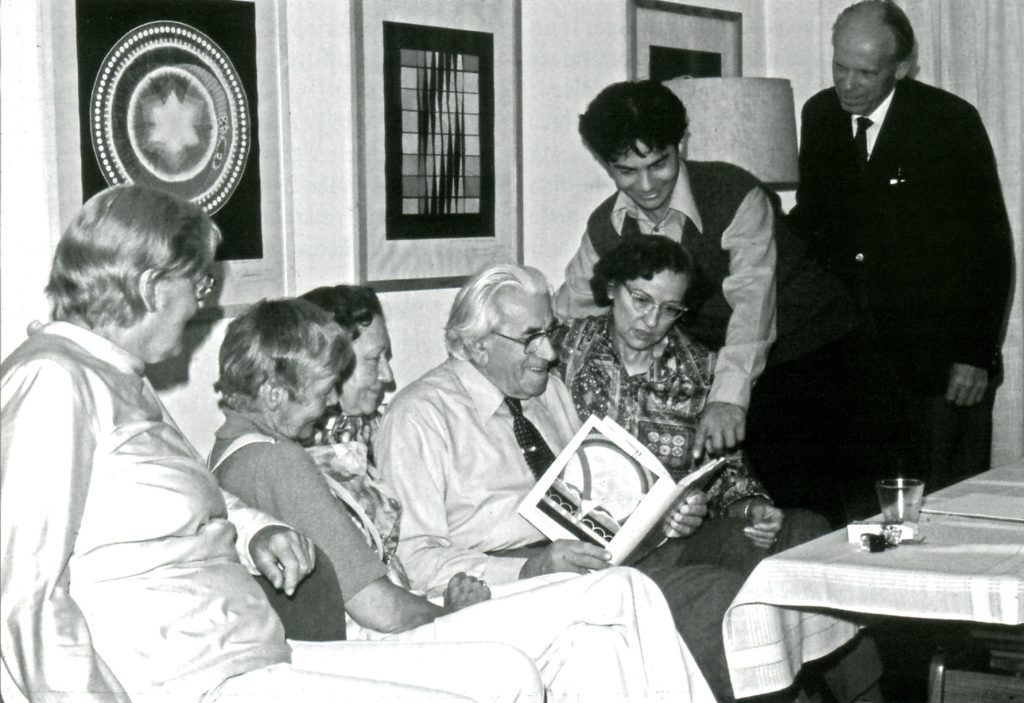
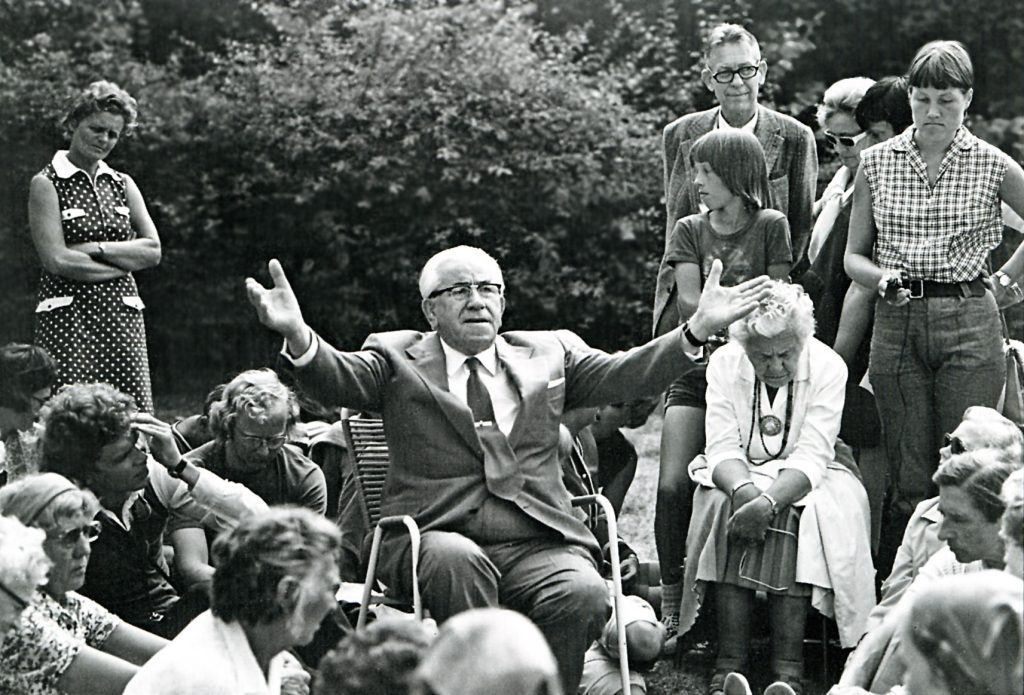
Martinus was privately a very friendly, warm and humorous person, who felt that his simple upbringing and lack of education enabled him to become a tool for the work he was set to do. It became a camouflage against personality worship. He saw the worldview as central, a worldview that belongs to all of life. He believed that what he was, everyone will one day become. All people should become cosmically aware as part of their natural development. He did not want to attract unnecessary attention, so that he could work on his writing in peace. Nevertheless, his visit to earth is unique in that he was permanently cosmically conscious, as was Jesus, who also lived in a deep closeness to God and the laws of love of life and who testified to this in the words: I and the Father are one.
Martinus lived in great proximity to the divine creation, in the midst of everyday Danish life. He did not behave like a guru or world teacher, but was quietly friendly and pleasant to everyone, and he himself says that he heard the voice of God speaking through all people, as part of a greater whole. His task was to convey the first great step towards a spiritual science on this globe. This work, in turn, was preceded by many other important steps. Martinus saw himself as part of a living organism, and he did not exaggerate his own importance. Martinus never married and was never interested in doing so. He simply could not fall in love, and instead said that he was married to the whole of humanity. His deepest inspiration lay in marrying something that benefited the whole of humanity.
Close colleagues tell us that he could be very determined and always with an undertone of kindness. He could also be very gentle yet logical without being sentimental. To many, this may sound like a typical fiction, as we are so very unaccustomed to there being real people of such human sympathy. No one ever saw Martinus irritated. He was said to have an infectious vitality and sense of humor, and an associate of his describes it as a “brilliant kindness” that radiated from his whole person. He never imposed his knowledge on anyone, believing he had no right to do so. Instead, he wanted to create a spirit of freedom, where spiritual science would guide man on his own unique path towards an expanded and loving consciousness, until one day he can independently see existence in its cosmic totality. She is then cosmically aware. He will see that all is very good.
Read more
In the book “Erindringer”, in Danish, Martinus tells about his childhood.
In the book “Martinus – som vi husker ham”, people close to Martinus tell about him.
In the book “Omkring min missions födelse”, he tells about his mission and his cosmic baptism of fire.